

Turbidity Probe High Range
The turbidity and suspended solid measurements are measured using the back
scattering method. In this process, a light beam is directed at the sample through an
optical lens. Suspended particles within the sample scatter the light, and this
backscattered light is captured by the probe through a second lens. This light is then
converted into an electrical signal that correlates with the turbidity level of the sample.
However, exposure of the probes to high external light can affect the accuracy of
turbidity measurements. To minimize this influence, the probe should be installed in a
way that protects the lens from direct sunlight or stray light.
These probes are effective for turbidity measurements in water quality monitoring,
industrial water treatment, and aquaculture applications.
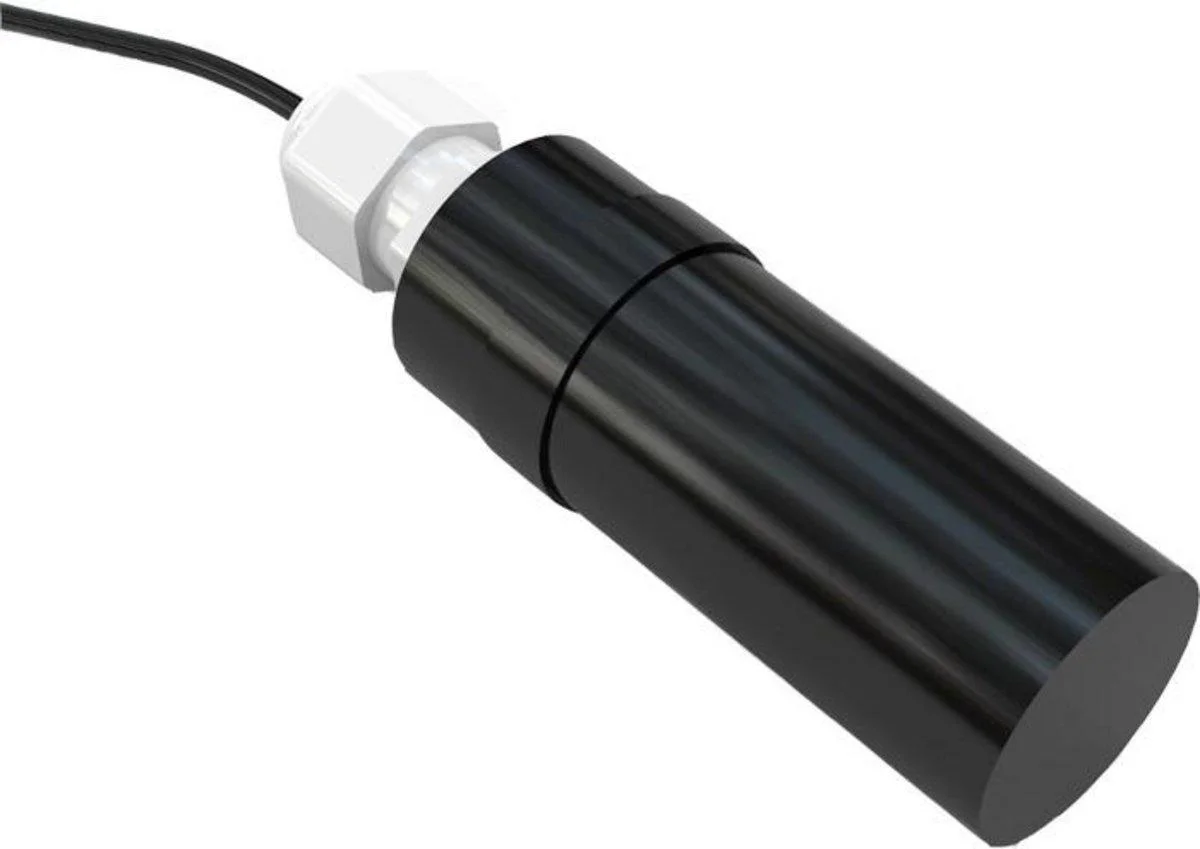
| Dimension Drawing | Measurement Range | 0 - 10 000 FTU |
|---|---|---|
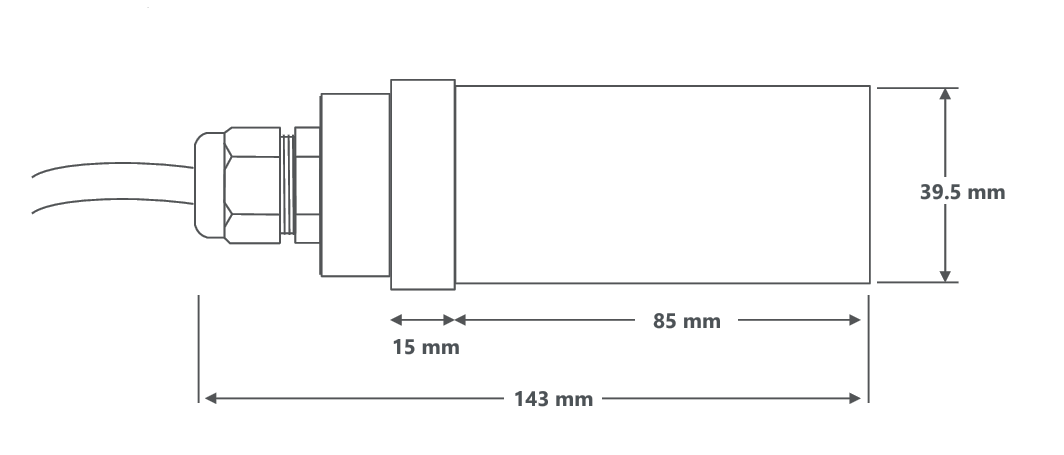
|
Measurement Technique | Back scattering |
| Detector | Photodiode | |
| Light Source | Infrared | |
| Sample Temperature Range | -5°C to 50 °C | |
| Working Pressure | 0 - 6 bar at 25 °C 0 - 3 bar at 50 °C |
|
| Body Material | PVC | |
| Connection | Screw terminal | |
| Mounting | In-line or In-flow | |
| Cable length | 10 meters | |
| Sensor Protection | IP68 |