

Self Cleaning pH Electrode
The pH-responsive glass membrane is coated with porous TiO2 and irradiated with UV light from within the electrode. This process activates the TiO2 coating, resulting in photocatalytic hydrophilicity and the formation of a water film (hydrophilic layer) on the surface, effectively preventing the adhesion of organic contaminants. Furthermore, the activated TiO2 facilitates the radicalization of water (H2O) and oxygen, enabling the disintegration of organic contaminants adhering to the external surface of the electrode.
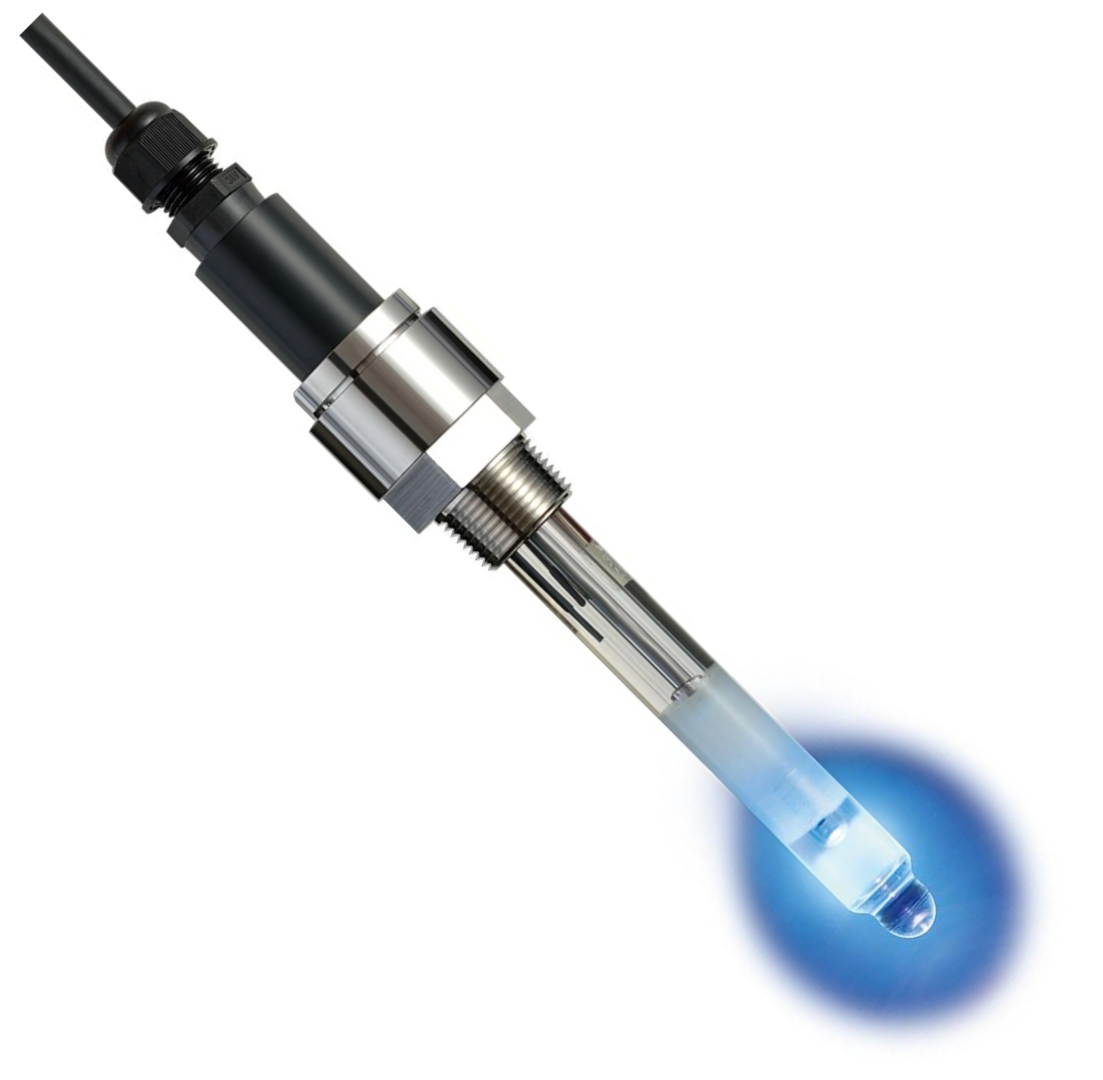
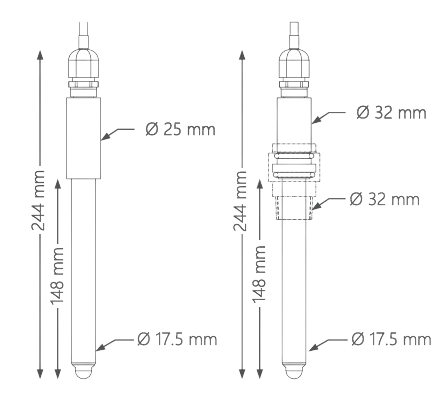
| Dimension Drawing | Electrode type | Gel-filled Self Cleaning pH Electrode |
|---|---|---|
 |
Self-cleaning | TiO2 coating membrane with UV light irradiation |
| Measuring Range | 0 – 14 pH | |
| Sample Temperature Range | 0 – 40 °C | |
| Sample Pressure Range | 0 – 0.1 MPa | |
| Sample Conductivity Range | 500 µS/cm or higher | |
| Electrode Structure | GRT composite electrode | |
| Internal Solution / Reference Electrode | Water-insoluble polymer gel, potassium chloride supersaturated | |
| Wetted Parts | Glass, TiO2 | |
| Cable Length | 5m / 10m | |
|
(1) When used in range of 0 to 2 pH or 12 to 14 pH, the electrode life will be shortened (2) At sample temperature above 30°C, the electrode life will be shortened |
||